
Ramadan Reflections #11: The Opium of Procrastination
🌙 Ramadan Reflections is a series of short essays where reflection turns into practice, and the heart returns to Allah.

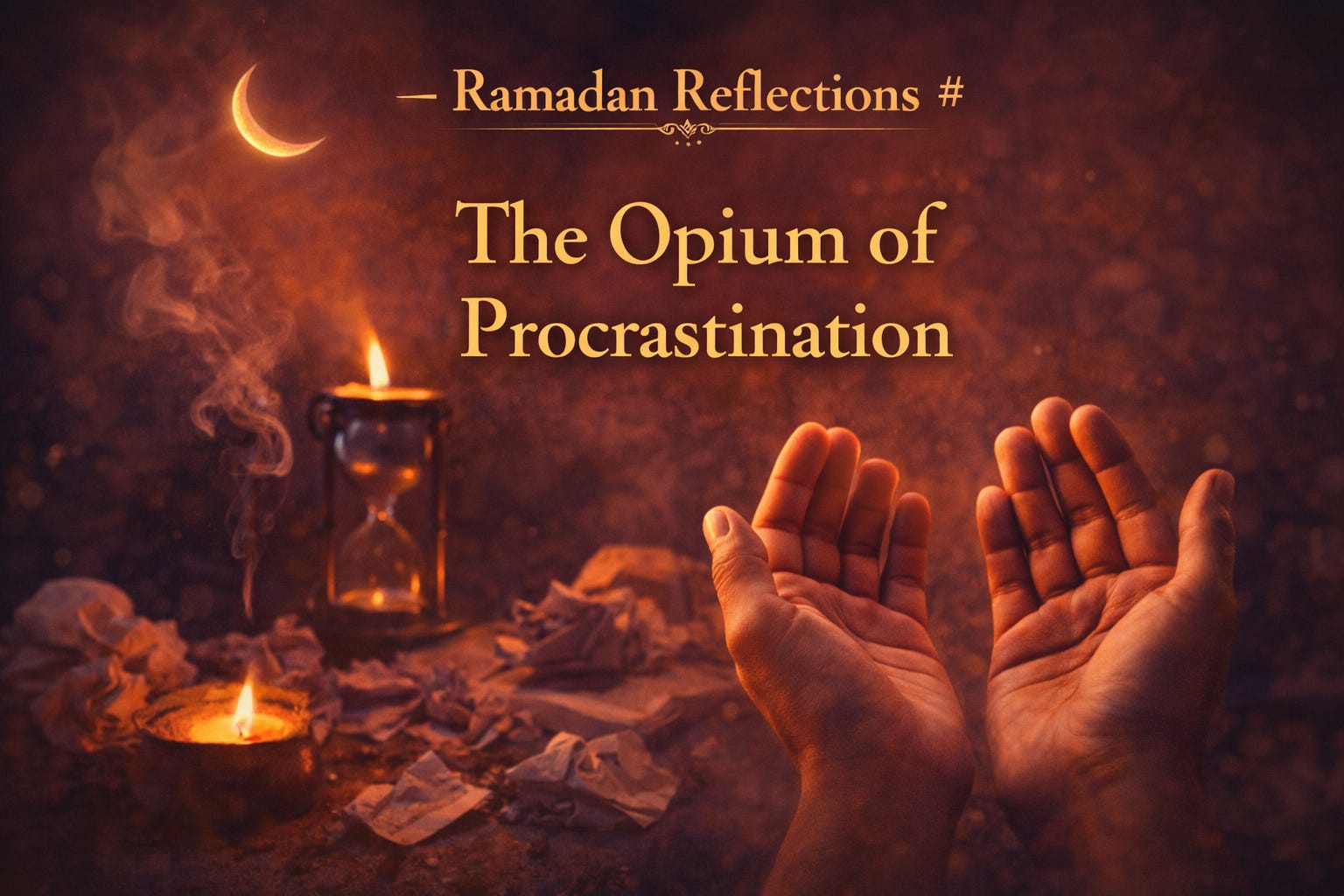
Procrastination is one of the strangest spiritual diseases because it rarely feels like a sin.
It feels like “later.”
It feels like “not today.”
It feels like “I will do it when I have more energy, more focus, more time.”
And then days pass.
Ramadan passes.
And the heart stays exactly where it was.
The nafs has a quiet drug
A religious teacher once said something that hits like a warning:
Do not take the “pill” of the nafs, which is full of opium.
Opium does not always knock you out instantly.
It numbs.
It softens urgency.
It makes a person comfortable in delay.
That is what procrastination does to the soul.
It does not always drag someone into open rebellion.
It often does something more subtle:
It makes a person sleepy toward the good.
Why procrastination is dangerous in Ramadan
Ramadan is not only about avoiding the haram.
It is also about seizing openings.
Because some doors are seasonal:
a heart that is easier to soften
a conscience that is easier to hear
a schedule that (at least in theory) makes more space for Allah
Procrastination turns those openings into background noise.
It tells us:
“You can start reading Qur’an tomorrow.”
“You can fix your prayer later.”
“You can stop this habit after Eid.”
But the truth is: the heart is trained by what it repeats.
If it repeats delay, delay becomes the default.
Procrastination is often fear wearing a mask
Sometimes the problem is not laziness.
It is fear:
fear of failing
fear of not being consistent
fear of starting and not finishing
fear of facing the heart honestly
So the nafs offers a deal:
“Do nothing now, and you will not have to feel uncomfortable.”
But in the end, that comfort becomes a cage.
The cure is small, immediate obedience
Procrastination is not defeated by a perfect plan.
It is defeated by a small act that happens now.
In spiritual life, “now” is a mercy.
Because Allah does not ask for the future.
Allah asks for this moment.
A short Ramadan practice: the Two-Minute Return
Try this for one day.
When you notice yourself delaying a good deed, do two minutes of the deed immediately.
Examples:
Read Qur’an for two minutes.
Make istighfar for two minutes.
Pray two rakʿahs (even if short).
Send one message to reconcile.
Give a small amount in charity.
The point is not the size of the deed.
The point is to break the spell of “later.”
Because once the heart tastes obedience, it often becomes easier to continue.
And even if it does not continue, the nafs has learned a new rule:
delay is not the boss.
Closing
Procrastination promises comfort, but it steals life.
It is a slow leak in the heart.
May Allah protect us from the opium of delay.
May Allah give us a heart that responds quickly.
And may Allah make our “later” into a sincere “now.” Ameen.
Series: Ramadan Reflections