

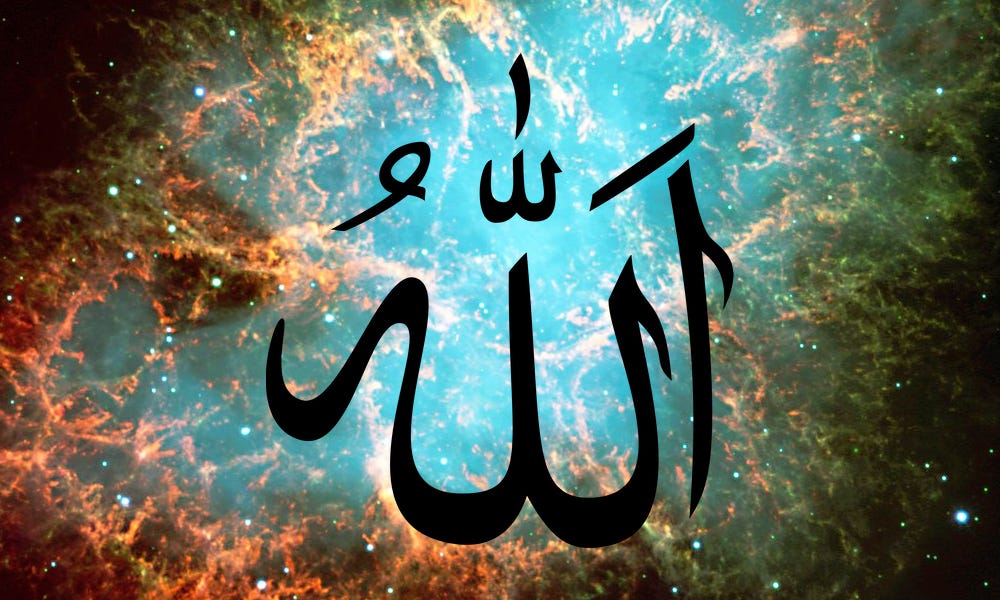
In a world filled with noise, pressure, and uncertainty, many people—Muslim and non-Muslim alike—ask the same quiet question:
Who is God, really?
This article is not a theological debate, nor a technical study. It is a gentle reflection—drawn from the Qur’an and the teachings of the Prophet Muhammad ﷺ—about how Islam describes God: His mercy, His power, His nearness, and His justice.
1. Allah Is Known by His Qualities
Islam does not ask people to imagine God randomly. Instead, Allah introduces Himself through His Names and Attributes, which describe who He is and how He relates to His creation.
“And to Allah belong the Most Beautiful Names, so call upon Him by them.” (Qur’an 7:180)
From the Qur’an, we learn that Allah:
Loves patience
Loves repentance
Loves purity and mindfulness
Is perfectly aware of everything
Is powerful without limitation
Is merciful without injustice
These are not abstract ideas. They shape how Muslims understand life, responsibility, and hope.
2. Allah Loves Those Who Are Patient
Everyone, at some point, carries something heavy.
Some carry grief. Some carry fear. Some carry questions they don’t know how to answer.
Islam does not deny this reality. It speaks directly to it.
“Indeed, Allah is with the patient.” (Qur’an 2:153)
This verse does not promise that life will be easy. It promises something quieter, but deeper: you are not alone in your struggle.
Patience (sabr) in Islam is not silence, weakness, or pretending everything is fine. It is the ability to keep going without losing your inner balance. To feel pain without letting it destroy your character. To wait without surrendering hope.
The Prophet Muhammad ﷺ once said that even the smallest pain a person experiences—a worry, a tear, a sleepless night—does not go unnoticed.
“No fatigue, illness, sorrow, sadness, harm, or distress befalls a person—even the prick of a thorn—except that Allah removes some of their burdens because of it.” (Bukhari & Muslim)
Nothing sincere is wasted. Not your endurance. Not your effort. Not your quiet strength.
3. Allah Loves Those Who Return
Islam does not see humans as flawless beings who fall once and are forever broken.
It sees humans as beings who forget, slip, regret, and return.
“Indeed, Allah loves those who constantly repent.” (Qur’an 2:222)
This is a powerful statement. Love is not reserved for the perfect—it is promised to those who come back.
Repentance in Islam is deeply personal. There is no confession booth. No public shame. No permanent stain. There is only honesty between you and the One who already knows.
The Prophet ﷺ said:
“Every child of Adam makes mistakes, and the best of those who make mistakes are those who repent.” (Tirmidhi)
This teaching removes despair. It tells you that failure is not the end of the story. Returning is always possible.
4. Near, Yet Beyond All Comparison
There are moments when a person feels unseen.
Moments when words stay inside, when prayer feels quiet, when life feels heavy and personal.
Islam speaks directly to this feeling.
“We are closer to him than his jugular vein.” (Qur’an 50:16)
This closeness is not physical. It does not mean God occupies space beside you.
It means nothing about you is hidden—not your fear, not your confusion, not your silent questions.
You do not need to raise your voice.
You do not need perfect words.
You are already known.
At the same time, the Qur’an is clear about something equally important:
“There is nothing like unto Him.” (Qur’an 42:11)
Allah is not a human presence scaled up. He is not limited by form, distance, or time. He does not resemble His creation, and He is not bound by the laws that bind us.
This balance matters.
He is close enough to know your heart—yet beyond anything your mind could imagine.
5. He Creates With Intention — Not at Random
At some point, many people quietly wonder whether their existence really matters.
Whether life is just a sequence of events, or whether there is meaning behind being here at all.
Islam answers this question gently, but firmly: you are not an accident.
“He is Allah, the Creator, the Maker, the One who shapes.” (Qur’an 59:24)
Creation in Islam is not chaotic or careless. It is deliberate. Thoughtful. Measured.
Even before a person enters the world, the Qur’an speaks of formation with purpose:
“He forms you in the wombs as He wills.” (Qur’an 3:6)
This does not deny biology or natural processes. It places them within a wider meaning.
Laws exist—but laws themselves are not random.
6. Guidance, Choice, and Responsibility
Some verses in the Qur’an speak about guidance and misguidance, and at first glance they can feel unsettling:
“Allah guides whom He wills and allows to go astray whom He wills.” (Qur’an 16:93)
But the Qur’an never presents this as randomness or injustice. Again and again, it reminds the reader that Allah is perfectly fair:
“Allah does not wrong anyone, even by the weight of an atom.” (Qur’an 4:40)
Guidance in Islam is not hidden or arbitrary. The Qur’an clearly describes the kind of people who are receptive to it:
“This is the Book in which there is no doubt—a guidance for those who are mindful of God: those who believe in the unseen, establish prayer, spend from what We have provided them, believe in what was revealed to you and before you, and are certain of the Hereafter. Those are upon guidance from their Lord.” (Qur’an 2:2–5)
Guidance, then, is not forced upon the heart. It is met with humility, honesty, and openness. People respond differently, and those responses carry responsibility.
At the same time, no one is asked to carry more than they are able:
“Allah does not burden a soul beyond its capacity.” (Qur’an 2:286)
This balance runs through the entire Islamic worldview: Allah is fully aware and in control, yet human choice still matters. Faith is not imposed—it is something a person moves toward, step by step, with sincerity.
7. Mercy, Honor, and Forgiveness
In Islam, honor is not measured only by success, status, or visibility. Sometimes honor appears quietly—in patience, in restraint, in choosing what is right even when no one is watching.
The Qur’an reminds us that honor ultimately comes from Allah:
“You give honor to whom You will, and You humble whom You will.” (Qur’an 3:26)
This does not mean that ease is always a sign of favor, or hardship a sign of rejection. Life moves between both, and wisdom is often hidden within that movement.
Above all, the Qur’an repeatedly returns to one central theme: mercy.
“My mercy encompasses all things.” (Qur’an 7:156)
This mercy is not fragile or limited. It reaches those who struggle, those who fall, those who return again and again. Forgiveness in Islam is not reserved for the flawless—it is offered to the sincere.
The Prophet Muhammad ﷺ expressed this hope clearly:
“Allah is more merciful to His servants than a mother is to her child.” (Bukhari & Muslim)
Honor, forgiveness, and mercy are not contradictions in Islam. They are intertwined. A person is honored not because they never fail, but because they are always invited back—seen, known, and never abandoned.
8. Allah Speaks to Be Understood
Islam teaches that Allah is not distant or silent. He communicates, not in riddles meant to confuse, but in a way meant to be understood.
The Qur’an describes itself as clear:
“These are the verses of a clear Book.” (Qur’an 12:1)
This clarity is intentional. Allah does not demand blind belief. He invites reflection:
“Do they not reflect upon the Qur’an?” (Qur’an 4:82)
In Islam, this means that knowing Allah is not separate from thinking, questioning, and observing. The Qur’an speaks to reason, conscience, and lived experience, repeatedly pointing back to who Allah is—His mercy, His justice, His knowledge, and His promise.
To read the Qur’an is not only to read a book. It is to encounter how Allah chooses to be known.
9. Allah Responds
One of the central descriptions of Allah in Islam is that He is not indifferent. He responds.
“Call upon Me; I will respond to you.” (Qur’an 40:60)
Allah responds. Sometimes by giving what is asked, sometimes by guiding a person toward something better, and sometimes by protecting them from what they cannot yet see.
The Prophet Muhammad ﷺ expressed this nearness clearly, and I mention it again:
“Allah is more merciful to His servants than a mother is to her child.” (Bukhari & Muslim)
To know Allah, in this sense, is to know that turning toward Him is never pointless. Not because humans are entitled—but because mercy is part of who He is.
Conclusion
This reflection does not aim to define Allah fully, because words cannot contain Him. It only aims to point, gently, toward how Islam speaks about Him: as close to us without being limited, powerful without being unjust, merciful without being careless.
For some, these words will feel familiar.
For others, they may feel new or even unresolved.
Both are fine.
Islam does not ask for rushed conclusions. It leaves room for time, for reflection, and for sincerity. Faith isn’t always a sudden, confident feeling — it can also be a gradual return, renewed again and again.
If there is one thing to carry from this, let it be this: nothing sincere is unseen. Not patience. Not struggle. Not the simple act of turning, even imperfectly, toward meaning.
And sometimes, that quiet turning is enough to begin.
I love this. Thank you for writing this.